
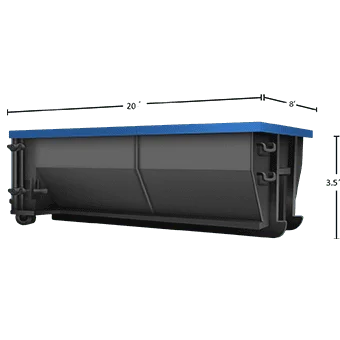
Choose a container rental for the work you are doing
A rental dumpster receives the accepted solid debris from your job so the loaded container can be collected for disposal. It is separate from toilet waste servicing. A roll-off format is delivered and retrieved using compatible transport equipment; confirm the particular container and loading arrangement in the proposed order.
A bulky furniture clearout and a dense renovation load can need different containers or loading limits even if the piles appear similar in size. Describe the material as well as the amount and ask about the offered capacity, dimensions and permitted fill. Loading labour, sorting and carrying debris out of a building should be requested separately rather than assumed to come with the container.
Separate materials before requesting a container
Describe the work: household clearout, renovation, construction or event cleanup. List the material types and flag items whose acceptance is uncertain. Do not treat paint, liquids, batteries, chemicals or other questionable material as ordinary mixed debris; ask the provider about the appropriate handling route before loading.
Dense material can reach a weight limit before a container appears full. Describe quantities and materials as accurately as you can, including whether they will be mixed. The provider must confirm acceptance, capacity and loading limits for the actual order.
Choose a loading plan that preserves site access
Consider who will load, where material waits and whether a container door must open. Keep pedestrian routes and sanitation access clear. A container beside a restroom bank can block servicing even if both fit on the property.
Confirm property permission, the proposed surface and any applicable placement process. Public space or a venue may have different conditions from a private drive. The rental quote does not establish permission to occupy a street or shared area.
Agree the waste and transport scope
Ask the quote to specify accepted materials, the hire period, weight and loading conditions, disposal terms, transport and collection. Discuss exchanges if the job will continue after a container is filled. Do not assume all debris or extra weight is included.
Keep material within the provider’s loading instructions, with no protruding or unsafe load. Request collection or an exchange through the agreed contact and preserve the truck approach. If the waste changes mid-job, confirm acceptance before adding it.
Keep sanitation waste separate
Restroom tank service is a different process from debris disposal. Do not put portable-toilet waste into a dumpster or use a toilet tank for cleanup debris. Explain both needs when requesting multiple services, with separate equipment and care requirements.
Questions before you book
Can the size be chosen from the amount of floor space being renovated?
That is only a starting clue. Material type, thickness, density and the work scope affect the load; describe the actual debris for a size and weight discussion.
What if I find a material that was not in the original request?
Pause before loading it and ask about acceptance. A change in material can change the disposal arrangement or require a different service.