
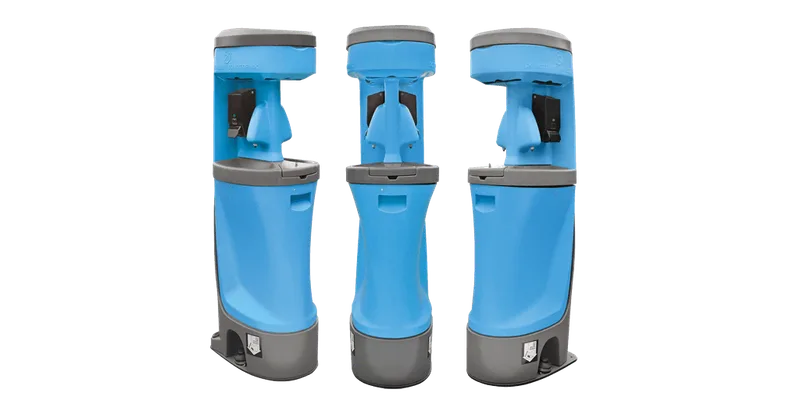
Choose the washing function you actually need
Explain whether the station is for restroom users, a work crew or an event activity. Requirements can differ by activity; a general portable sink should not be assumed suitable for every food-handling or hazardous-material task. Share any applicable instructions with the provider.
Confirm the offered unit’s operation and water arrangement. Ask what is supplied for soap and drying, how fresh water is replenished and how used water is contained and removed. Sanitizer and handwashing are different functions.
Give washing its own usable space
Place it where people can find and reach it after using the toilet, while keeping doorways and circulation clear. Check the intended users’ access needs and whether the station itself is suitable. A position convenient for replenishment still has to work for the user.
Explain the proposed surface and any required utility connection. Keep hoses, if used, out of routes or protect them through an agreed site arrangement; do not improvise a wastewater discharge onto the ground.
Treat replenishment as part of the service plan
Estimate the pattern of use and assign someone to report empty supplies or a station that does not work. Confirm which checks are the organizer’s responsibility and which replenishment tasks are included in contracted visits.
Review delivery, hire dates, cleaning, water, soap, drying supplies, wastewater handling and collection in the quotation. Ask how additional use or an extension will change the arrangement. A station that has run out of water is not a complete washing provision.
Questions before you book
Does every porta potty come with a sink?
No. Some offered models may have a sink, but a basic cabin should not be assumed to include one. Confirm the equipment list and any separate station.
Can event volunteers refill it themselves?
Ask the provider for the actual unit’s approved replenishment process and responsibilities. Do not open unfamiliar tanks or use an unapproved water source.